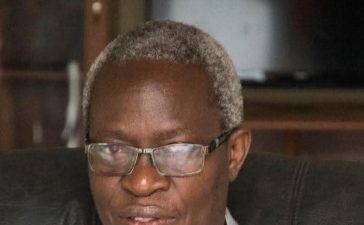


Lilongwe, Malawi — Malawi’s persistent poverty is largely the result of human decisions, not a lack of resources or bad luck, according to a reflection by Dr. Richard Nkhoma, a Malawian scholar and public commentator.
In a sharply worded assessment, Dr. Nkhoma argues that Malawi has many of the basic conditions needed for development but continues to fall behind because of poor priorities, weak leadership and failure to act on existing knowledge.
“Malawi’s poverty is not inevitable,” he says. “It is man-made.”
Dr. Nkhoma points to other countries that were once poorer than Malawi but have since transformed their economies. Some had no mineral wealth. Others were located in deserts with little water. Yet many of them are now prosperous. Malawi, by contrast, has abundant freshwater and has recently discovered a wide range of mineral resources, but still struggles with food shortages, energy problems and limited industrial growth.
“These comparisons make it hard to argue that our situation is due to fate or geography,” he writes.
One of Malawi’s biggest weaknesses, according to Dr. Nkhoma, is how it treats its people. For years, the country has invested in sending citizens abroad for training and education in places such as Israel, China, the United States and Germany. But when these individuals return, their skills are often ignored.
“There is knowledge and experience,” he says, “but it is rarely used.” He questions whether the government has ever made a serious effort to track these skills or create systems to put them to work.
Dr. Nkhoma is also critical of Malawi’s political culture. Election campaigns, he says, often focus on who can promise to attract the most donor aid, reinforcing a mindset of dependency. Leaders then present foreign trips to seek funding as major achievements.
“This does not build a nation,” he argues. “It weakens ambition.”
Even more damaging, he says, is the open acceptance of corruption. Some politicians publicly describe winning office as “their time to eat,” a phrase widely understood to mean personal enrichment.
“When theft is expected rather than condemned, development stops,” Dr. Nkhoma writes.
He notes that Malawi does not lack ideas or plans. The paths taken by countries like China, Indonesia and Finland are well documented. Malawian experts have also produced many strategies and policies over the years.
“The problem is not knowing what to do,” he says. “The problem is implementation.”
Dr. Nkhoma concludes that meaningful change will only come when Malawi shifts from talk to action, from dependence to self-reliance, and from empty promises to accountability.
“Development will not come from more reports or more donor trips,” he writes. “It will come when we use our people well, demand integrity from leaders, and finally do what we already know must be done.”