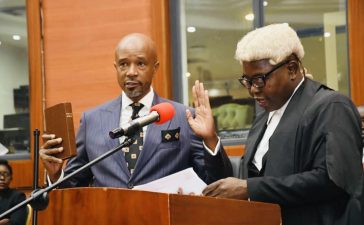

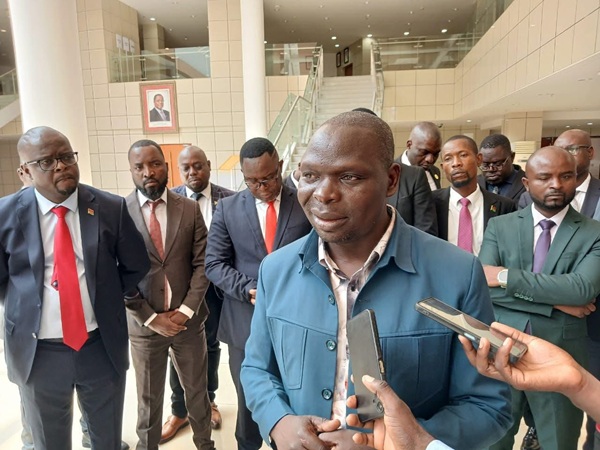
Today, opposition Malawi Congress Party (MCP) Members of Parliament, led by Leader of Opposition Simplex Chithyola Banda, took a step they had not taken before.
They boycotted parliamentary committee work.
It was a bold move. A consequential move. And, under the circumstances, a necessary one.
Until now, despite a sustained wave of arrests targeting former MCP cabinet ministers and the repeated disruption of parliamentary business, opposition MPs had remained largely restrained. Statements were issued. Legal processes were invoked. But politically, the response was cautious, fragmented, and ultimately insufficient.
That changed today.
For the first time, opposition MCP parliamentarians acted collectively and decisively, withdrawing cooperation and forcing an institutional pause. Committees stalled. Normal business stopped. And the state machinery was made uncomfortable.
This shift did not happen spontaneously. It is the direct consequence of sustained pressure from the Shire Times editorials, which for days have relentlessly argued that silence was being read as weakness, that fragmentation was inviting escalation, and that only coordinated political resistance could force recalibration within the state.
That argument has now been translated into action.
The arrests themselves reveal the state’s method. They have focused on former MCP cabinet ministers—individuals stripped of executive protection, isolated, and targeted one by one. In the early days, the party’s response exposed a dangerous vulnerability. The absence of a visible, unified political counterweight created space for escalation and reinforced the perception that the offensive would be absorbed quietly.
Public reaction has been unsparing.
Feedback from the grassroots has shown limited emotional investment in the suffering of leaders who, when power was held, were perceived to have eaten alone. The public reached instinctively for proverbs to explain what it was witnessing.
When rotten fruits fall, the tree regenerates and prepares to bear good fruit in the next season. Another proverb was sharper still: constipation has its own laws—those who ate too much and alone must suffer alone; no delegation is allowed in constipation.
These sayings are not mockery. They are political judgment.
The underlying message is clear: leaders who disconnect from their foot soldiers cannot expect foot soldiers to rise when crisis comes. That reality explains the quiet streets. The base is not yet ready to stand.
Which is precisely why today’s action by opposition MCP parliamentarians matters so much.
They have finally recognised a hard truth: division is no longer survivable. When MCP held power, arrogance produced factions and inflated egos. The collapse of September 16 was not accidental; it was structural.
Today’s boycott signals an understanding that unity is no longer ideological. It is existential.
Legally, the issue is straightforward. MPs engaged in parliamentary or committee business are protected from arrest—not to shield individuals, but to preserve the independence of legislative work. That protection has been repeatedly violated. Arrests during committee sessions are not procedural mistakes; they are institutional assaults.
By boycotting committees, opposition MCP MPs have done what court filings and press statements could not. They have imposed political cost. They have disrupted comfort. They have forced engagement.
Leader of Opposition Simplex Chithyola Banda’s confrontation with Speaker Sameer Suleman was not about personalities—Sosten Gwengwe or Sam Kawale. It was about whether opposition MPs can perform their constitutional duties without police interference.
If opposition MPs can be arrested while working, Parliament becomes decorative and opposition politics becomes ceremonial.
That the Speaker has now been compelled to engage the Inspector General of Police confirms the point: the pressure worked. The Shire Times was right to insist that escalation was inevitable. Disruption works. Political embarrassment works.
The lesson for MCP is now unmistakable. This momentum must not stall. The editorials must continue. The pressure must intensify. Opposition MCP parliamentarians must remain glued together, because public sentiment shows the foot soldiers are not yet ready.
When the state pushes, opposition MCP parliamentarians must push back—and today, for the first time, they did.
Silence is permission.
And in politics, when silence enables abuse, only sustained pressure restores balance.