
Politics is not inherited, and power is not passed through bloodlines. Malawi has learnt this lesson the hard way, and the story of Atupele Muluzi is the clearest proof. While some political sons have managed to rise above their fathers’ shadows through calculation and patience, Atupele’s journey has been a textbook case of squandered political capital.
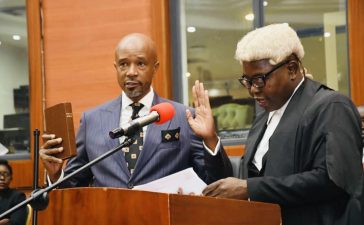
Compare him with Enock Chihana. Chihana had almost nothing to work with. AFORD is no longer a party of influence; it is a historical artifact. It is not even popular in the North. Yet, through shrewd calculation, patience, and political intelligence, Chihana has climbed to the position of Second Vice President of the Republic of Malawi. He has achieved what his father once did without enjoying his father’s political capital. That is no small feat. It shows discipline, restraint, and steel nerves. Politics rewards such traits.
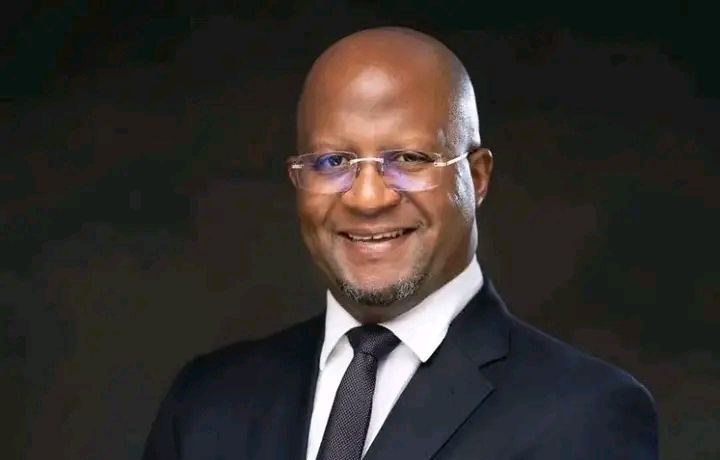
Atupele Muluzi, on the other hand, started with everything. He was the beloved son of former President Bakili Muluzi, a political giant who openly desired to see his son take over State House. The UDF presidency was handed to Atupele on a silver platter. The party platform was protected and cleared for him alone. Few politicians in Malawi’s history have been so carefully positioned for the presidency. Yet today, Atupele is nowhere near power. He is politically irrelevant, reduced to the status of an ordinary citizen, while others with far less pedigree are closer to succession than he is.
Ironically, Atupele began well. In the run-up to the 2014 elections, he captured the imagination of the youth. He spoke with courage against the Bingu wa Mutharika regime. He sounded bold, fearless, and hopeful. He represented a generational shift and carried the aspirations of young Malawians hungry for change. On merit alone, Atupele was on the right political path.
The turning point came after the sudden death of President Bingu wa Mutharika and the rise of Joyce Banda. Against the logic of political branding, Atupele accepted a cabinet position in her administration. The justification was that he needed executive experience. In reality, that decision marked the beginning of his decline. He failed to distinguish himself in cabinet and, worse still, later turned against Joyce Banda by contesting the presidency against the very leader who had appointed him. To Malawians, this signaled a lack of principle and political gratitude.
The damage deepened when Atupele later agreed to serve in Peter Mutharika’s cabinet. By then, his image as a youthful alternative had already been diluted. The youth base that once adored him shifted to the late Vice President Saulos Chilima, who embodied the boldness and clarity Atupele had abandoned. By associating himself with the DPP, Atupele handed over the UDF’s Eastern Region stronghold to his rivals. The consequences were devastating. In the 2019 elections, he lost the presidency, lost his parliamentary seat in Machinga, and watched UDF lose its regional dominance. The party effectively died, surviving only on paper.
His final strategic blunder was choosing to stand as Peter Mutharika’s running mate in the fresh presidential election, at a time when association with the DPP was deeply unpopular. Even more damaging were reports that MCP leader Lazarus Chakwera had considered him as a potential running mate. Atupele declined. That decision sealed his political fate. From that moment, his political capital did not merely fall to zero; it plunged into the negative.
After defeat, Atupele disappeared from the political scene, resurfacing later with a vague “business-first” agenda that failed to connect with struggling Malawians. The recent 16 September 2026 elections delivered a brutal verdict: Atupele was roundly rejected. The message from the electorate was unmistakable: leadership that floats above people’s suffering will not be trusted.
So, what went wrong? Atupele chose shortcuts over strategy. He listened to power brokers instead of the people. He mistook cabinet appointments for leadership and proximity to power for credibility. Unlike Enock Chihana, who has demonstrated patience and calculation, Atupele rushed, misread the moment, and allowed others—possibly even his father—to chart his course.
Can Atupele Muluzi resurrect politically? In theory, yes. But resurrection requires humility. He must abandon the illusion that Malawi is waiting for him. He must start again, stay with the people consistently, and stop disappearing until election season arrives. Politics is not a seasonal business. Until then, Atupele remains politically dead and buried—not by enemies, but by his own miscalculations. History will record this brutally: while some sons fall in battle, others are undone by reckless choices and wasted opportunity.