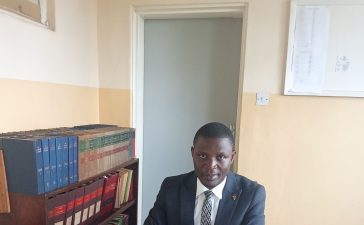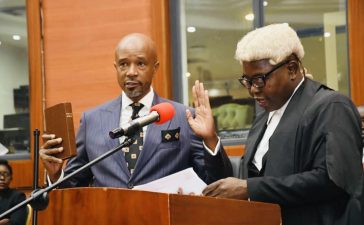

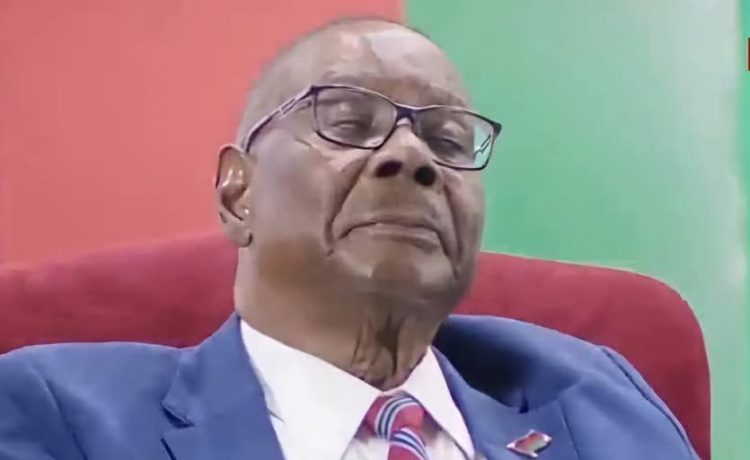
Lilongwe — A brief press statement issued by Secretary to the President Justin Saidi has stirred a wave of public debate after announcing that President Lazarus Chakwera would depart for South Africa on what was described only as a “private visit.”
Ordinarily, presidential travel is a matter of routine government communication. But this announcement, delivered without details about purpose, duration, or delegation, has left Malawians speculating and analysts raising questions about transparency at the highest level of government.
The administration has insisted that the trip is private. Yet critics argue that when a sitting Head of State leaves the country—even for personal reasons—the distinction between “private” and “public” quickly collapses under the weight of constitutional responsibility.
As governance commentator Allan Ntata framed it in a strongly worded critique circulating online, “There is no such thing as ‘private’ when the presidency itself is public property.”
A Presidency That Cannot Be “Off Duty”
In Malawi, as in most democracies, a president’s movements are inseparable from state functions: security arrangements shift, diplomatic communications adjust, and strategic decisions are delegated or delayed depending on who holds executive authority at any given moment.
That is why the announcement—delivered without additional context—has fueled both curiosity and concern. The President, now in his advanced 70s, has previously travelled abroad for undisclosed reasons, often prompting debates about the transparency of presidential health and capacity.
Governance experts say such ambiguity matters not because citizens are entitled to pry into private matters, but because a president’s physical fitness has direct implications for national stability.
“We are not dealing with an ordinary citizen,” noted one political analyst in Blantyre. “Investors, civil servants, diplomats—they all calibrate their decisions based on the certainty that the presidency is functional. When information is withheld, uncertainty grows.”
The Public’s Right to Know
Globally, democracies vary in how openly they treat the health of their leaders. But most agree on a central principle: a leader’s wellbeing, when it bears directly on the continuity of governance, is not merely personal business.
Ntata’s critique argues that withholding such information places the country in an unnecessary fog. “A president’s heartbeat is tied to the heartbeat of the nation,” he wrote. “When a leader hides behind the phrase ‘private visit,’ the nation’s anxiety becomes public.”
That sentiment echoes increasing calls in Malawi for clearer communication from State House about presidential travel, especially when the President leaves at politically sensitive moments or ahead of crucial national decisions.
Government’s Silence and the Questions Ahead
So far, government officials have dismissed concerns, insisting that the President is simply taking a private trip and that the public should not read more into the statement. But with no timeline provided for his return, questions persist about who is formally in charge and whether key state decisions may be delayed.
For many Malawians, the issue is less about speculation and more about principle: Should a president seeking another five-year mandate be held to a higher standard of transparency regarding his capacity to lead? And is the use of “private visit” becoming a convenient veil for matters of public relevance?
As Ntata put it, in a line now widely shared on social media:
“You must trust me with your lives, but I will not trust you with the truth about mine.”
What Comes Next
Until State House provides further clarification—or the President returns—the debate is likely to intensify. What remains clear is that the conversation has moved beyond a simple travel announcement and toward a broader demand for openness in Malawi’s democratic culture.
For now, the nation watches, waits and wonders what “private” truly means when spoken from the highest office in the land.