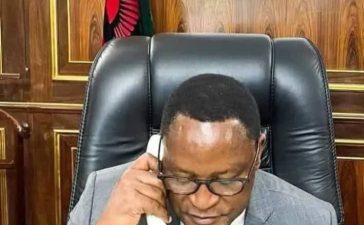

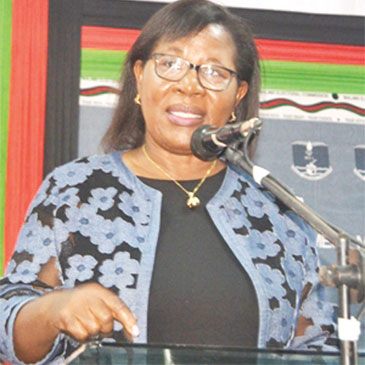
What is happening around Vice President Jane Ansah is not new in our politics, but it is still deeply troubling. Portfolios once under her authority have been stripped away. Recently, DODMA was also removed from her portfolio. These are not administrative coincidences. They are political acts. They signal succession battles and a deliberate effort to weaken the Vice President by denying her power, visibility, and public support.
The question we must ask is simple but important: why do presidents—or those around them—so often mistreat their own vice presidents?
According to information gathered by Shire Times, this is not President APM personally driving these decisions. Instead, it is political mercenaries operating behind the scenes, people whose main interest is not national stability but the consolidation of power for themselves. Within the DPP, camps have formed, and one camp is clearly opposed to Vice President Ansah. Their fear is straightforward: they believe she stands a real chance of taking over from APM.
That fear is not imagined. It is grounded in the Constitution. In the event of any eventuality, the Vice President is the lawful successor. This is not a political opinion; it is constitutional fact. No amount of internal scheming can change that reality. Those who are uncomfortable with it must simply live with it.
What we are witnessing, therefore, is not governance reform but pre-emptive political sabotage. By removing key portfolios from the Vice President, her opponents aim to make her look weak, irrelevant, and detached from national affairs. In politics, visibility matters. Authority matters. When both are taken away, the intention is clear: to shrink a potential successor before the public can fully see her leadership capacity.
This raises a deeper issue about power and insecurity. Strong leaders do not fear their deputies. Weak political actors do. When individuals around a president begin to see a vice president as a threat rather than a partner, it exposes their lack of confidence in ideas, performance, and popular support. Instead of competing through service delivery and policy success, they resort to manipulation.
If this scheme is about a post-APM era in 2030, then it is not only cynical but also premature. It is far too early to be fighting succession wars when the country needs cohesion and focus. APM was elected to govern now, not to preside over an administration consumed by internal power struggles. The logical approach would have been to allow the President and Vice President to work together, build trust, and present a united leadership front. That unity would strengthen both the government and the party.
By creating early animosity, these behind-the-scenes actors are damaging more than just the Vice President. They are weakening the presidency itself. A divided executive sends a signal of instability to the public and to institutions. It erodes confidence and distracts from real issues affecting ordinary citizens.
History teaches us that sidelining vice presidents rarely ends well. It breeds resentment, fuels factionalism, and often accelerates the very succession battles that political schemers claim to be preventing. In trying to block a constitutional possibility, they may actually be making it more inevitable.
Shame, therefore, on the boys ruling from the shadows. Leadership should be about service, vision, and respect for institutions—not fear-driven plots. The Constitution is clear. The Vice President’s role is clear. And the country deserves better than early, selfish power games dressed up as strategy.