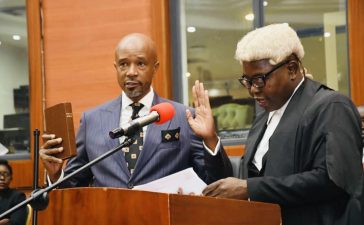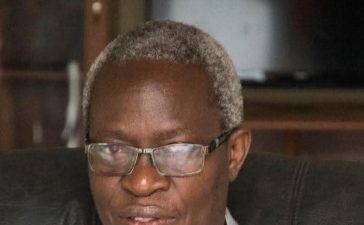


A case before the Lilongwe Senior Resident Magistrate Court has exposed serious weaknesses in the way the State is handling politically sensitive prosecutions. On Wednesday, the court openly faulted government prosecutors for ignoring clear court orders, raising fresh concerns about whether justice is being delayed for political reasons.
Senior Resident Magistrate Bracious Kondowe criticized the prosecution for failing to submit disclosure documents required before plea taking, despite having been ordered to do so as far back as December 15. The court warned that continued disregard for judicial instructions would not be tolerated, noting that such conduct weakens the justice system itself.
The State’s continued unpreparedness has kept Jessie Kabwila and former Trade Minister Vitumbiko Mumba on restrictive bail conditions, even though the prosecution appears unable—or unwilling—to move the case forward. Defence lawyer Khwima Mchizi argued that bail should not become a form of punishment when the State fails to act, reminding the court that accused persons remain under limited freedom while on bail.
Beyond the procedural failures, the case has fueled broader public suspicion that law enforcement is no longer acting independently. Critics argue that prosecutors appear to be taking direction from political actors linked to the ruling Democratic Progressive Party (DPP), rather than from the law itself.
In particular, some observers point to the growing influence of powerful party figures such as Deputy Minister Norman Chisale. Chisale, a long-time political enforcer within DPP circles and a former presidential aide, is widely viewed by critics as a symbol of how loyalty to power is rewarded while institutions are bent to serve political ends. While such claims remain allegations, their persistence reflects a deep erosion of public trust.
When courts must repeatedly remind the State to obey basic legal orders, the problem is no longer administrative—it is political. This case is no longer just about Kabwila and Mumba. It has become a test of whether Malawi’s justice system answers to the Constitution or to politicians behind the scenes.
If prosecutions are driven by political instruction rather than evidence and preparedness, the rule of law gives way to executive arrogance. That is a dangerous path for any democracy, and the court’s sharp warning should be taken as a final alarm.