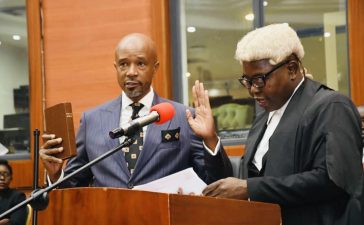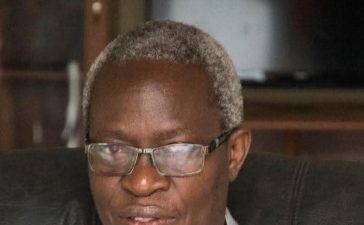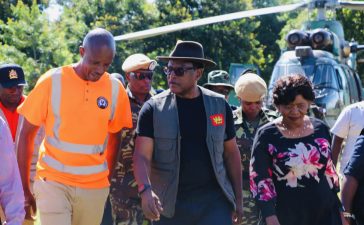

Private social media investigator Gerald Chavez Kampanikiza has alleged that the opposition Democratic Progressive Party (DPP) is pursuing a politically motivated revenge mission against senior Malawi Congress Party (MCP) officials, claiming recent arrests are not based on solid criminal evidence but on political retaliation.
Kampanikiza said there is no genuine legal basis for the arrest of MCP Secretary General Richard Chimwendo Banda, arguing that the matter is being driven by a desire to settle scores rather than to enforce the law. According to him, the arrests are intended to intimidate, politically frustrate MCP leaders, and weaken the ruling party ahead of future political contests.
He further alleged that the timing of the arrests was deliberate, claiming that some individuals were detained to ensure they remained in custody throughout the Christmas and New Year holiday period. Kampanikiza described this as a calculated move to mirror what he says happened to certain DPP members who were arrested and detained during the MCP administration, with some spending festive holidays in prison.
Kampanikiza claimed that several names were initially on a list of people targeted for detention over the holiday period, but that some managed to evade arrest after becoming aware of the plan. He added that arrests have continued into the new year, with some individuals allegedly being detained on legitimate grounds, while others, he said, are being arrested purely for political reasons.
He also questioned the credibility of allegations reportedly made to police by complainant Frank Chiwanda. Kampanikiza said Chiwanda claimed that during a press conference at MCP headquarters, he and others arrived late and were warned by a guard not to enter the premises because Richard Chimwendo Banda was allegedly inside and would confront them. Kampanikiza said Chiwanda allegedly panicked and decided to return to Blantyre.
According to Kampanikiza’s account, Chiwanda further alleged that he was followed by another vehicle as he traveled as far as Chingeni, before returning to Lilongwe. He claimed that at the Salima Turn-Off, a vehicle bearing party flags allegedly blocked him, after which he was apprehended, assaulted, and later abandoned.
Kampanikiza questioned why, if such a serious incident had occurred, the complainant allegedly passed through multiple roadblocks and police stations—including Six Miles, Nathenje, Dedza, Tsangano, and Chingeni—without immediately reporting the matter. He suggested this raises doubts about the consistency and credibility of the claims.
He concluded by calling for national reflection and reconciliation, urging political leaders to end what he described as a cycle of politically motivated arrests and persecution. Kampanikiza emphasized that lasting stability would only be achieved if all political parties commit to ending the use of state institutions for political revenge and instead uphold the rule of law without bias.