
Sunday afternoons are for truth. After church, after the hymns, after the sermons about humility and service, this is the hour when facts should speak plainly—without incense, without diplomacy.
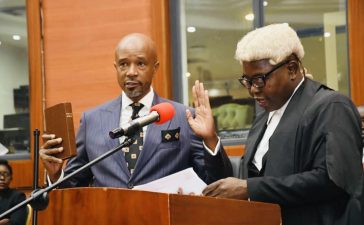
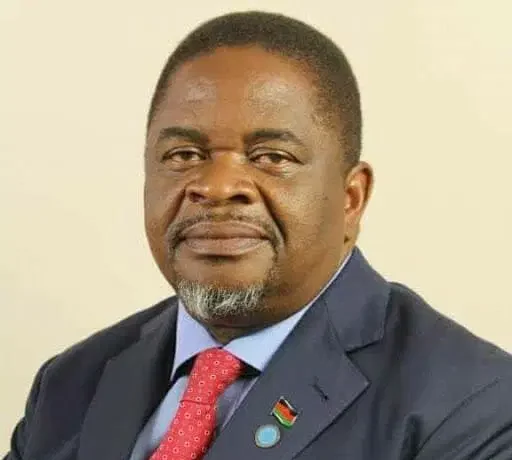
So let us talk about Bright Msaka.
Yes, Bright—at least by name. On paper, his résumé shines. Former Chief Secretary to the President and Cabinet under Bakili Muluzi, retained by Bingu wa Mutharika until politics caught up with him. A technocrat with pedigree. Educated. Polished. Comfortable in corridors of power. No argument there.
But politics is not a CV competition. It is a people’s business. And this is where Bright Msaka consistently fails the test.
When he joined the DPP and rode his public-service goodwill into Parliament as MP for Machinga, many thought: fair enough. A seasoned hand entering elective politics. But what followed exposed a troubling truth—this was never a man of the people. This was a man above the people, looking down.
Lonely. Ego-driven. Self-absorbed.
Education he has. Wisdom with people? None.
And in politics, chemistry with the people is oxygen. Without it, you suffocate.
Msaka’s parliamentary record reads like a manual on how to alienate voters. Take his infamous opposition to admitting locally trained law graduates to the Bar. At a time when Malawians were desperate for opportunity and fairness, he chose elitism. He used Parliament not to amplify public sentiment but to lecture it. The House rejected his position outright, throwing it where it belonged—into the political dustbin.
That should have been a moment of reflection. It wasn’t.
Despite being DPP Vice President for the Eastern Region, he was overlooked as APM’s running mate. Instead, Peter Mutharika bypassed him. That was not accidental. It was judgment. Msaka was weighed—and found wanting.
Then came the ultimate verdict: the ballot.
His own constituents rejected him. Not narrowly. Not controversially. Cleanly. They chose an unknown candidate over him. That is politics’ most brutal truth: when your own people fire you, no spin can save you. It means they saw no benefit in your leadership. No presence. No service. No connection.
That is the ceiling. Once your people abandon you, your national ambitions collapse.
Yet instead of humility, we got litigation.
Instead of introspection, we got denial.
Msaka ran to the courts, crying foul. The High Court dismissed his case, essentially telling him what voters already had: you lost. Be a man. Accept it. Now he is dragging the matter to the Supreme Court, still fighting the very people who spoke clearly at the polls.
This is not justice-seeking. This is ego refusing to accept reality.
Ironically, Peter Mutharika still threw him a lifeline—appointing him Minister of Education. A chance at relevance. A chance to reconnect with the people. What did Msaka do with it? He doubled down on unpopular decisions: attacking teachers running open-day secondary schools to survive; pushing for local printing of national exams in a country drowning in corruption.
Let us be honest—if we cannot trust ourselves to print ballot papers securely, how do we trust ourselves with exam papers? Lets start printing election ballot papers first if Msaka himself will not be the first person to protest.
These are policies detached from lived reality. Classic Msaka.
And why all this noise? Because deep down, he fancies himself a 2030 presidential contender. But here lies the insecurity: he is not even an MP. In politics, legitimacy begins at home. No constituency trust, no influence. A politician without voters is just a commentator with a driver.
Leadership is never forced. It is earned. People follow you because you served them well when they trusted you. Msaka forgot the people when he had power. When the time came, the people returned the favor—they forgot him.
Now he is crying all the way to the Supreme Court, fighting symptoms instead of accepting the diagnosis.
The truth is simple and brutal: Bright Msaka is not a man of the people. Until that changes, his ambitions will remain fantasies. If he cannot learn—despite age and experience—his relevance will fade alongside Peter Mutharika’s retirement.
Sunday truth, after church, with no sugar added:
Politics rewards humility and service. Ego gets recalled.
The people have spoken. Again.