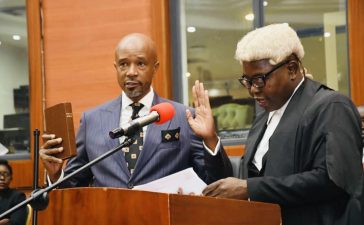


Shire Time’s Editorial, 14th January 2030
Malawians cried for justice, and for weeks the courts answered with silence. A man’s liberty was taken, days turned into weeks, and the judiciary appeared slow, cold, and detached. Justice delayed became justice denied. Judges are not gods. They are servants of the law. Yet in this case, the accused was treated as if he was at the mercy of the bench.
The prolonged failure to rule on bail exposed a worrying face of our justice system: pure inefficiency, wrapped in arrogance. A judge promised a bail ruling on 20 January, but before that date arrived, public confidence was already in tatters. When a court speaks without urgency on matters of personal liberty, it invites suspicion. It raises the question: was this delay innocent, or was it punishment by procedure?
Some even wonder whether the delay was done in quiet cooperation with the DPP, using the court process itself to punish Honourable Richard Chimwendo Banda. If so, that judge crossed a dangerous line. A judge who plays politics from the bench stops being a judge. If politics is the goal, then the honest path is to join a political party, not to hide behind judicial robes. That behaviour is not just wrong; it is shamefully low.
But let it be said clearly: not all judges are compromised.
Boom. Enter Honourable Justice Kenyatta Nyirenda.
When the heat was high and public trust was boiling, Justice Nyirenda did what the law demands. He arrived at a critical moment and did not disappoint. His ruling was firm, clear, and brave. By granting judicial review and ordering the immediate and unconditional release of Chimwendo Banda, he reminded the nation that the Constitution still matters. He effectively told delay, arrogance, and abuse of power to take a seat.
Justice Nyirenda’s decision was more than a legal ruling. It was a message. A message to rogue behaviour on the bench. A message that liberty is not a favour from the state, but a right. A message that courts exist to protect citizens, not to toy with them.
The Judge who delayed this matter should reflect deeply. His credibility has been damaged, and public trust is hard to rebuild once lost. Justice is not justice because people shout for it. It must be timely, fair, and equal—especially for ordinary Malawians who have no platform and no loud defenders.
This case exposes a painful truth: in Malawi, justice often moves faster only when there is public pressure. That should trouble us all.