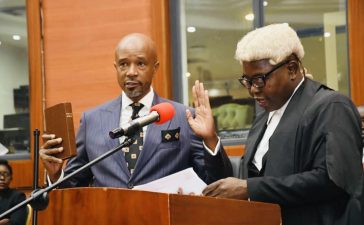


If Speaker of Parliament Sameer Suleman wants Malawians to believe that a new era of discipline has dawned in the august House, he should have demonstrated this toughness during the just-concluded Mid-Year Budget Review sitting—not in some future sitting conveniently scheduled for next year. Toughness, after all, is not a promise; it is an action observable in real time.
In announcing that Parliament will start deducting allowances from absentee MPs beginning with the first sitting next year, the Speaker inadvertently weakens the very resolve he seeks to project. The message sounds less like the start of a firm disciplinary regime and more like an administrative warning—precisely the kind of gentle nudge MPs have learned to ignore over the years.
Yet the Speaker’s own account shows that absenteeism is not a speculative problem but a chronic one. He admits that his office recorded numerous cases during this meeting alone—cases of MPs missing proceedings without notifying him, failing to seek permission, or simply choosing to be elsewhere while earning taxpayer-funded allowances. If this behaviour is already happening, and if Standing Order 41(3) already empowers the Speaker to act, why postpone enforcement?
Here lies the logical tension: a Speaker determined to restore order would begin by cracking the whip in the very session where disorder was observed. To postpone sanctions to a future meeting is to allow the current offenders to walk away untouched, their conduct effectively normalised.
Leadership, especially in Parliament, is as much about timing as it is about principle. Announcing strict measures for the next sitting may create a headline, but enforcing them now would create a precedent. And precedents—not speeches—are what MPs ultimately respect.
Consider the optics. The Speaker chastised MPs for ignoring procedure, for abandoning the 28-day rule in favour of the more permissive seven-day window. He lamented poor punctuality and non-attendance. He declared that punctuality and presence would now be enforced. Yet the punitive element of these declarations—the deductions, the accountability, the sting—has been deferred.
This contradiction risks rendering his tough talk hollow. It is akin to a referee watching multiple fouls in a match and announcing that cards will start being issued in the next game. The players may listen, but they certainly won’t change—not yet.
Even Leader of the House Jappie Mhango, in responding to the Speaker, reinforced this future-oriented framing: “We hope that, in the next meeting of Parliament, attendance will improve.” Again, the focus is tomorrow, not today. Hope is projected forward instead of discipline being enforced backward.
But governance is not improved by hope alone; it is strengthened by the courage to act in the moment. If absenteeism during this sitting was so rampant, then this was precisely the moment to test the Speaker’s authority, to apply the very Standing Order he cites, and to demonstrate that Parliament is finally serious about accountability.
To be credible, toughness must be immediate. Otherwise, it risks becoming just another pronouncement—heard today, forgotten tomorrow, and ignored when next year finally arrives.
If the Speaker wants to be taken seriously, he should not wait for the next sitting. The time to deduct allowances was this sitting, not the next. Only then would his toughness have been real, visible, and unmistakable.